
First Gen recognizes the urgent need for the energy grid to stop relying on coal and to shift to clean and renewable energy. The Company’s natural gas, geothermal, hydro, wind, and solar assets play an important role in creating a low-carbon economy to stop projected natural catastrophes brought about by climate change. The Company’s power plants operate in the most efficient, safe, and environmentally sound manner to manage the scarce resources that serve as natural capital for the business.
First Gen’s Environment, Safety, and Health (ESH) policy guides the Company’s compliance with regulations and management of its environmental impacts through responsible management of effluents and wastes; and stewardship and environmental protection through its low-carbon emissions and efficient use of natural resources. Its power plant operations are compliant with government and industry environmental standards and their Environmental Management Systems (EMS) are certified under ISO 14001:2015. Below is a summary of the EMS scope per power plant.
| BUSINESS UNIT | EMS SCOPE |
|---|---|
|
First Gas Power Corporation/ FGP Corp./ First NatGas Power Corp. |
Asset Management of Santa Rita, San Lorenzo, and San Gabriel Natural Gas Power Plants |
| FG Bukidnon Hydro Power Corporation | Operation and Maintenance of 1.6-MW Hydroelectric Plant |
| First Gen Hydro Power Corporation | Operation and Maintenance of Pantabangan and Masiway Hydroelectric Plants |
| Mt. Apo Geothermal Business Unit | Fluid Collection Re-injection System, Power Plant and Control Center, Switchyard, Waste Management, and Other Support Facilities for Mt. Apo Geothermal Power Plants 1 and 2 Operations |
First Gen and and its subsidiary Energy Development Corporation (EDC), through the Legal and Regulatory Group, participate in government consultations on relevant environmental protection and management policies and regulations and contribute information on the particulars of First Gen and EDC energy technologies so they can be covered in the regulations. Some of the policy discussions participated in by the Company include House Bills No. 144 and 8089 requiring "Mandatory Environmental Insurance Coverage for Environmentally Critical Projects of the Department of Environment and Natural Resources (DENR)” and those of the Department of Energy (DOE) such as Circular No. DC2020-04-0009 “Guidelines Governing the Issuance of Operating Permits to Renewable Energy Suppliers under the Green Energy Option Program” and Circular No. DC2020-07-0017 “Promulgating the Guidelines Governing the Policy for the Conduct of Green Energy Auction in the Philippines”.
CLIMATE RISK STRATEGY
Taking an active role in addressing climate change risks
Because of the nature of its business, First Gen has a high contribution to the GHG of the power sector. As such, the Company continues its commitment to never invest in coal and focus on its natural gas and renewable energy portfolio. This is how the Company contributes to climate change mitigation: by avoiding emissions that would have otherwise been released via coal, the Company’s clean and renewable energy portfolio will help bring down the power sector’s carbon intensity.
First Gen employs adaptation and mitigation strategies to limit the impacts of Climate Change in its operation. First Gen invested in enhancing flood control systems to avoid flooding in critical facilities during heavy rains and typhoons. Through typhoon monitoring, early warning advisory, and effective typhoon preparedness protocol implemented at the sites, the impacts of typhoons have been minimized.
Renewable energy technologies contribute significantly to reducing GHG emissions and to the security of the energy supply. In comparison with conventional coal power plants, First Gen’s renewable energy projects prevented GHG emissions of about 6,944,415.1 tCO2e in 2020, contributing significantly to climate change mitigation.
First Gen recognizes its role in educating host communities on climate change and its impact. Since 2017, First Gen has been conducting information, education, and communication (IEC) campaigns on climate change adaptation and mitigation in its host schools and communities. The Company also holds mentoring sessions to help the communities identify and implement local climate actions that would address the need of their communities. The Company institutionalized its employee advocacy through training them as facilitators and climate ambassadors.
EMISSIONS
Using natural gas as main fuel for First Gen’s CCGT power plants in Batangas City provides a great leverage versus that of other fossil-fuel fired thermal power plants due to its low carbon emissions. First Gen’s total carbon emissions of 5,532,523.1 tCO2e in 2020 is 71% lower than a coal-fired power plant’s carbon emissions, generated from producing the same amount of energy of 19,684,415.0 MWh. Moreover, producing power using our clean and renewable energy plants have avoided the release of 13,564,692.9 tCO2e GHG emissions, equivalent to removing approximately 2.9 million passenger vehicles driven for one year.
Carbon Emissions
| SCOPE 1 IN TONNES CO2e (tCO2e) | SCOPE 2 IN TONNES CO2e (tCO2e) | |||||
|---|---|---|---|---|---|---|
| FACILITY | 2020 | 2019 | 2018 | 2020 | 2019 | 2018 |
| Santa Rita | 2,504,084.2 | 2,577,969.3 | 2,716,462.4 | 104,108.3 | 0.0 | 0.0 |
| San Lorenzo | 1,265,498.4 | 1,273,089.3 | 1,334,205.6 | 52,618.3 | 0.0 | 0.0 |
| San Gabriel | 527,969.4 | 899,354.1 | 748,034.6 | 20,253.7 | 0.0 | 2,806.1 |
| Avion | 79,119.4 | 99,160.2 | 64,773.5 | 7,561.1 | 1,888.3 | 1,680.8 |
| Agusan | 9.1 | 13.0 | 14.5 | 0.2 | 0.0 | 0.0 |
| RBC Head Office | 22.8 | 64.8 | 180.6 | 0.0 | 0.0 | 719.3 |
| Pantabangan- Masiway | 92.3 | 96.5 | 140.6 | 303.3 | 321.9 | 326.5 |
| EDC | 964,254.0 | 855,967.6 | 807,438.9 | 3,317.9 | 4,072.7 | 4,409.0 |
| TOTAL | 5,341,049.7 | 5,705,714.8 | 5,671,250.5 | 188,162.8 | 6,282.8 | 9,941.7 |
| SCOPE 3 IN TONNES CO2e (tCO2e) | EMISSION INTENSITY IN TONNES CO2e PER MEGAWATT HOUR (tCO2e/MWh) | |||||
| FACILITY | 2020 | 2019 | 2018 | 2020 | 2019 | 2018 |
| Santa Rita | 27.5 | 0.0 | 0.0 | 0.38 | 0.36 | 0.37 |
| San Lorenzo | 1.4 | 0.0 | 0.0 | 0.37 | 0.34 | 0.37 |
| San Gabriel | 0.0 | 0.0 | 0.0 | 0.37 | 0.33 | 0.34 |
| Avion | 0.0 | 0.0 | 0.0 | 0.0 | 0.0 | 0.0 |
| Agusan | 6.7 | 0.0 | 0.0 | 0.0 | 0.0 | 0.0 |
| RBC Head Office | 0.0 | 15.6 | 9.9 | - | - | - |
| Pantabangan- Masiway | 86.8 | 0.0 | 3.2 | 0.0 | 0.0 | 0.0 |
| EDC | 3,188.3 | 5,193.0 | 5,811.3 | 0.12 | 0.11 | 0.10 |
| TOTAL | 3,310.6 | 5,208.6 | 5,824.5 | 0.28 | 0.26 | 0.27 |
Reduction of GHG Emissions
As part of First Gen’s GHG emission reduction initiative, its FGCEC installed rooftop solar panels in its Administration building. Through this initiative, from January to December 2020, 55,910.1kWh of electricity was reduced, which is equivalent to 32.4 tCO2e reduced for the Company’s Scope 1 emissions.
In 2020 the parent company in collaboration with First Gen conducted a decarbonization study for the power segment of the business. The details of the study are for discussion with concerned groups of First Gen in 2021.
Other Emissions
With the dry-low NOx technology that is embedded in the plants’ combustion systems, the Company is assured that the flue gas emissions are way below the emission limits set under the RA 8749 (Philippine Clean Air Act).
| WEIGHT IN TONNES CO2e (tCO2e) | EMISSION INTENSITY IN TONNES CO2e PER MEGAWATT HOUR (tCO2e/MWh) | |||||
|---|---|---|---|---|---|---|
| EMISSION | 2020 | 2019 | 2018 | 2020 | 2019 | 2018 |
| Carbon Monoxide (CO) | 878.3 | 1,106.4 | 1,071.8 | 0.08 | 0.08 | 0.09 |
| Nitrogen Oxides (NOx) | 2,477.1 | 3,386.3 | 3,943.3 | 0.21 | 0.24 | 0.33 |
| Sulfur Oxides (SOx) | 98.1 | 185.7 | 135.0 | 0.01 | 0.01 | 0.01 |
| Particulate Matter (PM) | 79.6 | 186.2 | 195.8 | 0.01 | 0.01 | 0.02 |
ENERGY EFFICIENCY
First Gen implements an extensive maintenance program to ensure that the power plants are operating at its optimum efficiency. The Heat Recovery Steam Generator (HRSG) units of the CCGT power plants help optimize the power plant’s output and the conversion of fuel to electricity versus that of a conventional thermal power plant.
| ENERGY CONSUMPTION IN GIGAJOULES (GJ) | |||
|---|---|---|---|
| FACILITY | 2020 | 2019 | 2018 |
| Santa Rita | 21,479,674.9 | 20,172,208.0 | 22,097,988.0 |
| San Lorenzo | 10,350,867.4 | 9,359,888.4 | 10,806,728.6 |
| San Gabriel | 4,262,158.4 | 6,265,548.9 | 5,420,922.8 |
| Avion | 994,043.3 | 1,060,033.6 | 690,864.9 |
| Agusan | 128.4 | 22,310.1 | 13,641.5 |
| RBC Head Office | 323.6 | 5,349.7 | 6,036.0 |
| Pantabangan-Masiway | 7,625,396.3 | 3,560,762.9 | 4,170,050.2 |
| EDC | 110,234,100.6 | 93,665,821.2 | 100,999,494.1 |
| TOTAL | 154,946,692.9 | 134,111,922.7 | 144,205,726.1 |
EDC launched a fleetwide program called Bantay Enerhiya that aims to reduce electricity consumption of city offices and other facilities consuming electricity from the grid. In the program, electrical components were assessed and optimized to reduce electricity consumption. One of the key activities was the optimization of the Uninterrupted Power Supply (UPS) complements at the Head Office. The number of UPS units were reduced; hence, saving electricity from some rooms which run on 24/7 air conditioning. The overall office air conditioning was also optimized by setting a common and comfortable temperature all throughout the day. Furthermore, employees utilize smaller rooms and not the main floor when rendering overtime work, thereby minimizing the utilization of bigger size air conditioning units.
To strengthen efforts in energy management and in compliance to the requirements of RA 11285, otherwise known as the Energy Efficiency and Conservation Act, all requisitions on energy- consuming products including appliances, lighting, electrical equipment, and machinery and transport vehicles are compliant with the Minimum Energy Performance (MEP) standards requirements of DOE. In addition, FG Hydro adopted the requirements of ISO 50001:2018 or the Energy Management Standard. This is to ensure that it has a structured approach in energy management. FG Hydro is currently developing its Energy Baseline, Performance Indicators, Objectives, Targets, and Action Plans for those areas within FG Hydro operational control of significant energy use.
WATER AND WASTEWATER MANAGEMENT
| WATER AS A SHARED RESOURCE | |||
|---|---|---|---|
| FACILITY | AREAS OF OPERATION AND VALUE CHAIN WHERE WATER IS USED AND HOW IT IS USED | WATER SOURCE | POINT OF DISCHARGE AND HOW EFFLUENTS ARE MANAGED |
| Santa Rita (SR) | Ground water (deep well) is used to produce demineralized water, which is being used as feed water for the HRSG boilers. Ground water is also used as potable water for domestic purposes. Seawater is being used for one-pass through cooling water to condense steam from HRSG. The condensate (water) is returned back to the boilers for steam generation. |
Ground water:
Seawater: |
Used water is treated in the following: neutralization systems, oil-water separators, and sewage treatment plants (STP) before being discharged to Batangas Bay. Quality of effluents are being monitored and analyzed in the in-house laboratory every other week by the Operation and Maintenance (O&M) Contractor and quarterly by a third party service provider recognized by Department of Environment and Natural Resources-Environmental Management Bureau (DENR-EMB). No heavy metals are detected in SR, SL and SG effluents. Cooling water system is a once- through non-contact system, where seawater for cooling is returned back to Batangas Bay upon passing through the condenser. Temperature change is monitored by getting the temperature difference between the daily temperature logs from the outfall and the intake. Physico- chemical quality of seawater intake and discharge are being monitored every other week by the O&M Contractor and quarterly by a third- party service provider recognized by DENR-EMB. Please note that the cooling water discharges has no pollution load. No heavy metals are also detected from the cooling water discharge. |
| San Lorenzo (SL) | |||
| San Gabriel (SG) | |||
| Avion | Ground water (deep well) is used in a closed loop cooling tower. Ground water is also used for domestic purposes. | Ground water: two dedicated deep wells for Avion Power Plant | Used water is treated at the water treatment plant and discharged to the two retention basin for settling before final discharge. Oily wastewater are treated at the oil water separators. The final effluents are discharged to the Cabubulag River and eventually to the Batangas Bay. Quality of effluents are being monitored and analyzed on a monthly basis by third party service provider recognized by DENR-EMB. |
| Agusan | The plant is a run-of- river type consisting of two 800-kW turbine generators that use water from the Agusan River through a six- kilometer headrace and a 2.83-hectare forebay to generate electricity. | The Agusan mini-hydro plant is located in Damilag, Manolo Fortich, Bukidnon, 36 kilometers southeast of Cagayan de Oro City in Northern Mindanao. Aside from power generation, the river also serves as a source for the irrigation system especially in the upstream areas by farmers. | The diverted water that runs the plant of two 800-kW turbine generators is being discharged back to the river. |
| Pantabangan-Masiway | Water is used as cooling water for operations, as well as for domestic use | PHEP - Pantabangan reservoir, MHEP - Masiway Reservoir | Effluent is treated in the sewage treatment plant and discharged to tailrace. Water quality is monitored quarterly. |
| EDC Geothermal (BacMan, Leyte, Southern Negros, Mt. Apo) | For its operation, EDC uses geothermal condensate for cooling but make up freshwater is drawn as needed. Freshwater is also used for domestic purposes. | EDC withdraws freshwater from river systems in the vicinity of the geothermal facilities, as well as from local water districts and water concessionaires. | EDC implements Zero Discharge System in its geothermal facilities. With this system, geothermal water is being reinjected back to the geothermal reservoir, thereby sustaining geothermal resource and preventing contamination of surface waters and shallow groundwater sources. Domestic wastewater is subjected to sewage treatment facility before being discharged. Ambient water quality is monitored and reported to the country’s environmental regulatory agency quarterly. |
| EDC Burgos | Freshwater is used for domestic purposes | Freshwater is withdrawn from local water districts and/or water concessionaires | Domestic wastewater is subjected to sewage treatment facility before being discharged |
| EDC Head Office | |||
| RBC Head Office | |||
| WATER-RELATED IMPACTS | |||
|---|---|---|---|
| FACILITY | CURRENT OR POTENTIAL WATER-RELATED IMPACTS | MEANS OF IDENTIFYING WATER-RELATED IMPACTS | MEASURES TO ADDRESS WATER-RELATED IMPACTS |
| Santa Rita (SR) | SR, SL, and SG use large amounts of groundwater in its operation. The impacts associated with over extraction of ground water is water scarcity/ depletion of water, salt water intrusion, deterioration of water quality and ground subsidence. | These water-related impacts were identified in the Environmental Impact Statement (EIS) |
|
| San Lorenzo (SL) | |||
| San Gabriel (SG) | |||
| Pantabangan-Masiway | No effect as First Gen uses excess water provided by government’s National Irrigation Administration (NIA) | Environmental Impact Assessment (EIA) |
|
| EDC Geothermal (BacMan, Leyte, Southern Negros, Mt. Apo) | With Zero Discharge System and water quality monitoring system is in place to ensure zero impact. The Company has no or minimal expected water-related impacts. | EIA and Stakeholder consultation | Operation of domestic wastewater treatment facilities |
| MANAGEMENT OF WATER-RELATED IMPACTS | |||
|---|---|---|---|
| FACILITY | PHILIPPINE STANDARDS FOR QUALITY OF EFFLUENTS DISCHARGED | ||
| Santa Rita | The effluent quality of wastewater discharges follow the DENR Administrative Order (DAO) 2016-08 Standards for Class SC Water. Initial parameters were identified in the EIS and additional priority parameters were added based on the prescribed parameters per industry classification in DAO 2016-08. | ||
| San Lorenzo | |||
| San Gabriel | |||
| Avion | The effluent quality of wastewater discharges follows DAO 2016-08 Standards for Class SC Water. | ||
| Agusan | FG Bukidnon follows the general effluent standards indicated in DAO 2016-08. FG Bukidnon also conducts and applies DENR Approved Method of Analysis (Method of Standards) in its regular water testing at the plant to verify and ensure that the water passed the set water quality (e.g. pH, color, Total Suspended Solids (TSS), Oil & Grease & and Biochemical Oxygen Demand (BOD)). FG Bukidnon has also secured a discharge permit pursuant to Republic Act 9273 otherwise known as the Philippine Clean Water Act of 2004. | ||
| Pantabangan-Masiway | FG Hydro follows the general effluent standards indicated in the DAO 2016-08. | ||
| EDC Geothermal (BacMan, Leyte, Southern Negros, Mt. Apo) | EDC follows the general effluent standards indicated in the DAO 2016-08. | ||
Regular monitoring of water withdrawal is conducted in all First Gen power plants to ensure compliance with the extraction rate limits set by the National Water Resources Board for groundwater and seawater. The seawater used by thermal plants for condenser cooling employs a once-through system and returned to the sea. Wastewater treatment facilities comply with effluent quality before discharge to receiving bodies of water. Effluent quality is regularly monitored before discharge, in compliance with the Philippine Clean Water Act of 2004.
| EXTRACTION IN MEGALITERS (ML) | |||
|---|---|---|---|
| FACILITY | 2020 | 2019 | 2018 |
| Santa Rita | 603,700.1 | 601,909.5 | 626,039.5 |
| San Lorenzo | 255,111.2 | 265,168.9 | 308,296.4 |
| San Gabriel | 166,563.7 | 243,156.4 | 238,132.3 |
| Avion | 142.7 | 187.8 | 136.4 |
| Agusan | 48,654.4 | 38,739.7 | 45,568.4 |
| RBC Head Office | 0.0 | 2.9 | 2.4 |
| Pantabangan-Masiway | 1,916,435.0 | 1,896,683.0 | 1,636,948.9 |
| EDC | 2,014.7 | 2,079.0 | 1,077.6 |
| TOTAL | 2,992,621.8 | 3,047,927.1 | 2,856,201.9 |
| DISCHARGE IN MEGALITERS (ML) | |||
|---|---|---|---|
| FACILITY | 2020 | 2019 | 2018 |
| Santa Rita | 603,518.7 | 601,793.1 | 608,436.3 |
| San Lorenzo | 254,939.9 | 264,929.8 | 297,304.8 |
| San Gabriel | 166,539.3 | 243,125.9 | 238,099.0 |
| Avion | 13.7 | 17.8 | 15.5 |
| Agusan | 48,654.4 | 38,739.7 | 45,568.4 |
| RBC Head Office | 0.0 | 2.9 | 2.4 |
| Pantabangan-Masiway | 1,916,435.0 | 1,896,683.0 | 1,636,948.9 |
| EDC1 | - | - | - |
| TOTAL | 2,990,101.0 | 3,045,292.1 | 2,826,375.3 |
1EDC implements a Zero Discharge System
| CONSUMPTION IN MEGALITERS (ML) | |||
|---|---|---|---|
| FACILITY | 2020 | 2019 | 2018 |
| Santa Rita | 181.4 | 116.4 | 393.4 |
| San Lorenzo | 171.3 | 239.1 | 319.0 |
| San Gabriel | 24.4 | 30.5 | 44.7 |
| Avion | 129.0 | 170.0 | 136.4 |
| Agusan | 0.0 | 0.0 | 0.0 |
| RBC Head Office | 0.0 | 0.0 | 2.4 |
| Pantabangan-Masiway | 2.0 | 3.2 | 0.3 |
| EDC | 2,014.7 | 2,082.0 | 1,073.5 |
| TOTAL | 2,522.8 | 2,641.2 | 1,969.6 |
First Gen endeavors to minimize the environmental impacts of its operations by using water efficiently and ensuring that the quality of its wastewater discharges is within the limits set under Republic Act (RA) 9275 (Philippine Clean Water Act). Wastewater is treated to ensure that the pollution loads of its effluents are just minimal and will not affect the carrying capacity of the receiving body of water.
Water Management Project
First Gen ensures that its operations comply with international standards related to quality, environment, safety and health (QESH). Water is essential in the operation of the plants as well as in their administrative offices. First Gen recognizes the importance of industrial water resource management both at the societal and industrial context. As part of its corporate water stewardship and efforts for continuous improvement of its operations and services, First Gen intends to determine the water footprint of its natural-gas power plants, prepare water use disclosure reports, and determine opportunities for improving its water footprint. In view of ensuring the sustainability of its operations and of the water environment, First Gen wants to determine the sustainability of its water footprint, determine opportunities and options for water use reduction assess its present water resource, determine risks pertaining to its dependence on water resources, and evaluate other available water resource.
In connection with the water use improvement objective, First Gen commissioned the University of the Philippines National Engineering Center (UPNEC) to conduct a water footprint assessment and to provide technical assistance in developing a corporate water strategy for First Gen, focusing on the identification of opportunities for reducing water use and minimize the impact of its operation on water systems as well as the risk associated to its dependence on water resources. Tools that are currently being utilized in industrial sustainability reporting were used to determine the water footprint of First Gen.
The water footprint assessment tracked the water flow from the point of entry into the facility until its point of discharge. It identified points of water use and estimated the water usage in each point and quantified unaccountable water losses and possible leaks. It also considered the quality of the water used and the water discharged. The water audit determined the water footprint for each unit of operation or process to determine the water usage rate per industry.
The study adopted available water accounting and auditing tools for water use profiling and calculating the business water footprint. To be able to develop a corporate water strategy for water sustainability, water resource assessment and water risks assessment will be done for several scenarios of water demand and water supply on the succeeding phase of the project.
WASTE AND HAZARDOUS MATERIALS MANAGEMENT
First Gen manages its various wastes in a way that cross contamination of non-hazardous and hazardous wastes are prevented from the point of generation, storage, transport, treatment, and disposal. The Company ensures that its wastes are managed according to the waste management hierarchy: elimination, reduction, reuse or recycling, treatment, and disposal that is in accordance with the RA 9003 (Philippine Ecological Solid Waste Management Act) and RA 6969 (Toxic Substances and Hazardous and Nuclear Wastes Control Act). The Company established an integrated waste management program to ensure that hazardous and non-hazardous wastes are stored, transported, treated, and disposed of according to regulatory requirements and standards. Due diligence of third-party service providers is carried out in compliance with regulatory requirements.
Both hazardous and non-hazardous wastes were greatly reduced from 2019 generation due to the work-from-home arrangements implemented by the Company starting March 2020 because of the pandemic.
| WASTE GENERATION (IN TONNES) | |||
|---|---|---|---|
| WASTE | 2020 | 2019 | 2018 |
| Hazardous | 345.6 | 993.9 | 160.9 |
| Non-hazardous | 333.8 | 1,729.7 | 4,957.7 |
| TOTAL | 679.4 | 2,723.6 | 5,118.6 |
| MANAGEMENT OF SIGNIFICANT WASTE-RELATED IMPACTS IN COMPANY OPERATIONS | ||
|---|---|---|
| ACTIVITY/PROCESS | WASTE MANAGEMENT | IMPACT MANAGEMENT |
| Hazardous and Non-hazardous wastes generated from company operations |
|
|
“The Company employed waste minimization methods in its operations and support processes.”
Waste diverted from and directed to disposal
All hazardous wastes generated are transported, treated, and disposed of by DENR-recognized transporters and treaters. Recyclable hazardous waste (i.e., waste oil and used lead-acid batteries) are disposed of under the Bantay Kalikasan Project of the ABS-CBN Lingkod Kapamilya Foundation, Inc. (ALKFI). Proceeds from the recycling of waste oil and used lead-acid batteries are donated to ALKFI. Used lead-acid batteries (ULABs) and used oil are disposed of under the Bantay Kalikasan.
Non-hazardous wastes in FGCEC, on the other hand, are composted and used as fertilizer for the plants in the area.
The Company employed waste minimization methods in its operations and support processes. Hazardous wastes are reduced through process improvement and change in use of raw materials. Its laboratories improve operations by substituting regulated chemicals with non-regulated chemicals, including reducing the volume of samples, which translates to less generated wastes.
| WASTE DIVERTED FROM AND DIRECTED TO DISPOSAL | |||
|---|---|---|---|
| PROCESS | 2020 HAZARDOUS WASTES IN TONNES | 2020 NON-HAZARDOUS WASTES IN TONNES | |
| Diverted | 292.2 | 129.1 | |
| Disposed | 52.4 | 196.9 | |
| Stored | 1.0 | 7.7 | |
| TOTAL | 345.6 | 333.8 | |
POLLUTION REDUCTION
Using the best available technology and best environmental practices in First Gen’s facilities ensure that pollution sources are managed right from the point of generation. For the pollutants that the Company cannot eliminate from the source, the Company ensures that programs are implemented to limit its impacts within the set threshold. Periodic assessments are being conducted for the various First Gen sites to ensure that cumulative impacts of its facilities are assessed, and environmental risks are adequately managed.
EDC implements a Zero Discharge System in its geothermal sites. Through this setup, geothermal waters (brine and condensate) are contained and re-injected into the geothermal reservoir; thus, it sustains the geothermal resource while avoiding contamination of surface waters and shallow groundwater sources. Effluents from daily operation of facilities are limited to domestic wastewater and washings, which are conveyed to septic tanks. The quality of the effluents is monitored and evaluated against the DENR effluent standards under the Administrative Order 2016- 08, or the Water Quality Guidelines and General Effluent Standards.
Being a hydro company, FG Hydro’s power plants (PHEP and MHEP) emit zero pollution during plant operation. Auxiliary equipment like Emergency Diesel Generators (EDGs) is utilized sparingly throughout the year as needed for plant start-up. Despite this, the Company ensures that its issued Permit to Operate (Air Pollution Source & Control Installations) for these EDGs is renewed annually to ensure compliance to regulatory requirement. The Company vehicles are also regularly maintained to ensure the highest performance and lowest possible emissions.
CONSERVATION OF THE NATURAL WORLD
First Gen strives to protect and enhance its immediate environment as it operates its businesses.
Protecting the environs of First Gen Clean Energy Complex (FGCEC)
First Gen established a natural buffer zones consisting of a 10-hectare mangrove forest, within its facilities. This mangrove forest provides a habitat to various aquatic and terrestrial fauna and regulates seawater inundation in the area. This mangrove reforestation site has been a source of mangrove propagules and seedlings being distributed to various mangrove-replanting sites within Batangas province. These habitats also help offset the Company’s carbon footprint. Toward the marine environment of the natural gas power plant, the Company continues to implement the “Center of the Center Project” that contributes to the conservation of the biodiversity of the marine protected area, the Verde Island Passage. First Gen also has a long-term partnership with DENR, under the Adopt an Estero/ Water Body program that protects and enhances the Cabubulag River in Brgy. Sta. Clara, Batangas City.
Protecting the environs around renewable energy projects
The forest cover around the Company’s geothermal and hydropower plants are protected and propagated to ensure the delivery of optimum forest goods and services that help recharge energy reservoirs and serve the various publics and compatible enterprises dependent on the watershed.
| OPERATIONAL SITES IN PROTECTED AREAS | |||||
|---|---|---|---|---|---|
| OPERATIONAL SITE | LOCATION | TYPE OF OPERATION | AREA (HA) | BIODIVERSITY VALUE1 | IMPACTS ON BIODIVERSITY |
| Bacon Manito Geothermal Project | Manito Albay and Bacon Sorsogon | Geothermal | 330.0 | The Bacon Manito is a Key Biodiversity Area | Generation of temporary impacts to biodiversity in the development phase of geothermal operations such as vegetation clearing, noise, and other geothermal-related activities |
| Leyte Geothermal Project | Kananga and Ormoc, Leyte | Geothermal | 614.2 | The Leyte Geothermal Project is within the Anonang-Lobi Key Biodiversity Area | |
| Southern Negros Geothermal Project | Valencia, Negros Oriental | Geothermal | 294.1 | The Southern Negros Geothermal Project is within the Cuernos de Negros Key Biodiversity Area and adjacent of the Balinsasayao Twin Lakes Natural Park | |
| Mt. Apo Geothermal Project | Kidapawan, North Cotabato | Geothermal | 146.3 | The Mt Apo Geothermal Project is adjacent to the Mt Apo Natural Park | |
1 Declared Protected Area, International Union for Conservation of Nature (IUCN) Protected Area, Convention on Wetlands of International Importance (Ramsar Convention), etc.
Habitats Protected or Restored
Below is a summary of the various environmental programs that enrich the habitats in areas around the Company’s clean and renewable energy projects.
| PROGRAM NAME | LOCATION | PROGRAM DESCRIPTION | SIZE OF HABITAT PROTECTED OR RESTORED (HA) | PROGRAM PARTNERS | PROGRAM STATUS AS OF YEAREND |
|---|---|---|---|---|---|
| Adopt-a- River/ Water Body Program | Batangas City | Maintenance and protection of Cabubulag River | 1.8km stretch | DENR | Regular monitoring and clean-up activities are being conducted. |
| Establishment of a mini - Mangrove Forest | Batangas City | Establishment of a mini-mangrove forest within the FGCEC area as part of the Power Plants' buffer zone. | 10.0 | - | Continuous enhancement planting activities |
| BINHI | Pantabangan, Nueva Ecija | Reforestation using prime endangered tree species and to provide sustainable livelihood for upland communities | 1,059.0 | 4 Farmers and Fishermen Associations | Monitoring of project sites continuously implemented |
| BINHI | Albay and Sorsogon | Forest restoration using native tree species and commercial tree crops to enhance the biodiversity of the watersheds and provide sustainable livelihood of the upland communities | 1,604.0 | Alliance of BacMan Farmers Association, Inc. | |
| BINHI | Leyte and Southern Leyte | 1,699.0 | 25 Farmers, Differently Abled Persons and Community Associations | ||
| BINHI | Negros Oriental and Negros Occidental | 3,414.0 | 39 Farmers, Fishermen, Swine and Fisherfolks Associations, Volunteers, Forest Foundation and Agricultural Cooperative |
In 2020, the Company established and restored forests in the following areas, bringing the total area of forests restored under BINHI to 9,570.0 hectares.
- New plantations of 91.0 hectares of indigenous forest trees in BacMan, Negros Oriental, and Pantabangan
- Enrichment planting of 30.0 hectares old plantations and forest gaps in Mt Apo
- Maintained1,399.0hectaresofexisting plantations in BacMan, Negros, Mt. Apo, and Leyte
- Generated more than 276,000 quality seedlings of Philippine native tree species in the Company’s various nurseries (seedlings are used for reforestation or dispersed to partners to expand restored areas)
In Pantabangan, the 1,058.0 hectares planted since 2010 is estimated to be able to sequester up to 103,781.0 tCO2e based on the USAID’s Agriculture, Forestry and Other Land Use (AFOLU) calculator.
Carbon sequestered from First Gen’s forest protection and reforestation initiatives is estimated at 1,844,489.0 tCO2e.
The following are the estimated carbon sequestered per site:
| SITES | CARBON SEQUESTERED IN TONNES CO2e (tCO2e) |
|---|---|
| FGCEC Mangrove | 884.0 |
| Natural forest in Geothermal Reservations | 1,739,824.0 |
| Pantabangan BINHI Plantation | 103,781.0 |
| TOTAL | 1,844,489.0 |
The Company undertakes a holistic approach in managing the forests within its project sites. Despite the pandemic, First Gen’s geothermal subsidiary continued to conduct forest protection initiatives as the deputized manager of watersheds within its geothermal reservations. Last year, the Company patrolled and protected 34,744.0 hectares of conservation areas within and adjacent to its four geothermal reservations. These entailed 779km of forest patrols using the technology-based Lawin Forest and Biodiversity Protection System, 25km of fire line protection in Mt. Apo, and 350km of drone patrols in Leyte watersheds.
BIODIVERSITY AND WATERSHED MANAGEMENT
First Gen established and continues to manage the mangrove forest within the periphery of its natural gas power plants, despite being in an industrial zone in Batangas City. The mangrove forest has become a sanctuary for various flora and fauna species.
In the geothermal and hydropower sites, the Company has developed in-house experts and specialists in its EDC subsidiary who can implement a comprehensive Biodiversity Conservation and Management which entails monitoring of flora, fauna, and freshwater macro invertebrates; mapping and protecting High Conservation Value Areas (HCVA) within geothermal reservations; and adopting wildlife species. The Company also implements a holistic upland community management program that helps transform upland communities within the vicinity of its project sites into effective stewards of watershed resources.
Forest Restoration and Protection
As the deputized watershed manager in geothermal reservations, First Gen’s subsidiary EDC has the responsibility and unique opportunity to protect the forest resources and the diverse wildlife that thrive within the watersheds. Its main forest management program BINHI involves forest protection and upland community management resulting in the continuous provision of ecosystem services to all upstream and downstream communities. BINHI is one of the country’s biggest private-sector led reforestation initiatives to protect and conserve the environment not only to the EDC’s area of operations but nationwide using native trees and high-value tree crops.
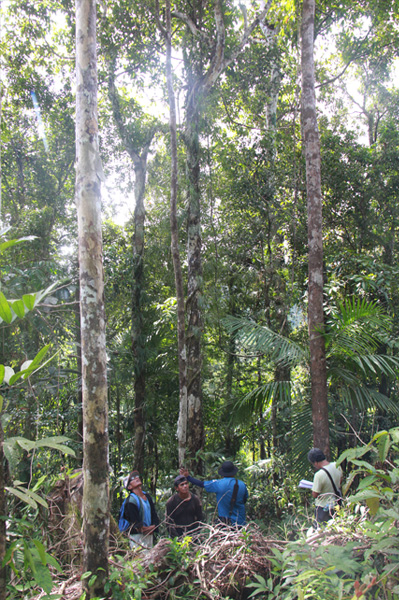
Population inventory of priority Philippine threatened trees in Samar Island Natural Park
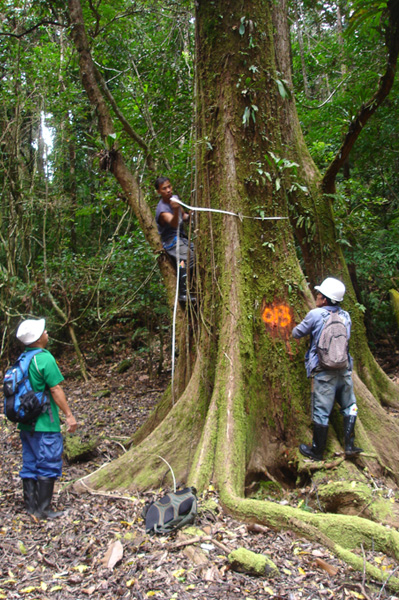
Population survey of the 96 priority threatened Philippine Native trees
Mainstreaming of Philippine Native Trees
EDC continuously implements its multi-awarded initiative to rescue, protect, and propagate 96 Philippine native tree species, many of which are categorized as critically endangered or at the brink of extinction. Through BINHI, EDC serves as a national catalyst for strategic partnerships on mainstreaming Philippine native trees throughout the country.
BINHI’s strategy in mainstreaming Philippine native trees entails two approaches. One ex-situ conservation, which involves collaborating with stakeholders to put up arboreta and tree parks that are specifically dedicated to house threatened native trees. The Company aims to grow these into mother trees that will produce viable seeds for years to come. The arboreta and tree parks are also strategically located in areas where people can visit and gain awareness about the importance of forests and biodiversity. EDC and its BINHI partners have so far collectively established 15 arboreta as well as 162 tree parks that serve as safe havens for threatened native tree species.
The second approach, called in-situ conservation, involves the protection of the threatened native trees in their natural habitat. EDC has identified six habitats or landscapes that collectively host 11 of the rarest and most threatened Philippine native tree species. Last year, EDC signed a Memorandum of Agreement (MOA) with the Ecosystems Research and Development Bureau (ERDB), the principal research and development unit of the DENR. Through this partnership, EDC and ERDB will collaborate and research on site-species suitability and growth development, as well as on the development of propagation protocols for the most rare and threatened among the BINHI native tree species.
Biodiversity
In January 2020, EDC and the UP Institute of Biology (IB) published Wildlife Treasures, a book that showcases illustrations and information on the diverse wildlife thriving in EDC’s geothermal reservations. This is a culmination of more than a decade of collaboration between EDC and UPIB to monitor, study, and document the various flora and flora through its Biodiversity Conservation and Monitoring Program (BCMP). The book is also a tribute to EDC’s partners in biodiversity conservation, particularly to the late Dr. Perry S. Ong, Head of the institute.
EDC also remains committed in standing together with its long-time partners DENR and the Philippine Eagle Foundation (PEF) in protecting the remaining species of the critically-endangered Philippine eagle (Pithecophaga jefferyi).
Last year, PEF and EDC collaborated to rehabilitate and eventually release a female Philippine Eagle named Makilala-Hiraya. The eagle was rescued in June from being mobbed by a flock of crows in Barangay Kisante in Makilala, Cotabato, near the Mount Apo Natural Park where EDC operates. EDC also committed to support monitoring activities to ensure that the bird reaches sexual maturity and has the chance to nest. The eagle’s second name, “Hiraya,” was given by EDC employees. It is a Filipino word that translates to “fruit of one’s hopes, dreams, and aspirations”, and reflects EDC’s collective aspiration for the continued conservation and flourishing of the species. The release of Makilala-Hiraya was also live streamed on Facebook to raise awareness to the public.
Another important milestone last year was the confirmation of a Philippine Eagle nesting area in Tawason Forest in November 2020. This is a result of the collaborative initiative of PEF, EDC, and DENR for the Philippine Eagle Nest Survey, which began in 2019. This initiative aims to enhance local awareness and capacity for eagle conservation and find and study active nests within or around the Mt. Apo Geothermal Reservation. In December 2020, a family of Philippine Eagle was discovered in EDC MAGP’s area of responsibility. PEF reported that a two-year old Philippine Eagle was observed hunting, which indicates its readiness to fledge and soon find its new territory. The eagle parents were also observed doing aerial courtship and talon display, which indicates that they are ready to mate.
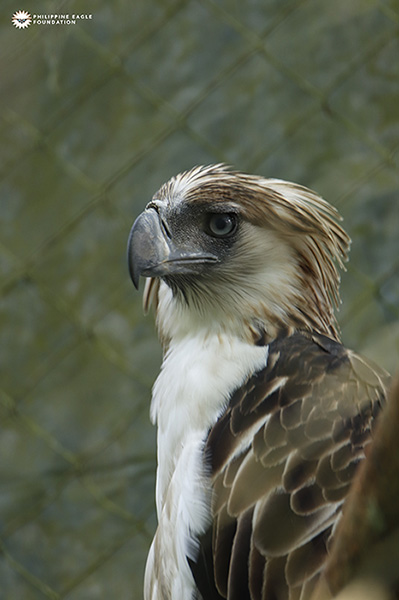
Makilala-Hiraya, the female Philippine Eagle (Pithecophaga jefferyi) that was rescued and released in Mount Apo Natural Park. (Photo Credits to Philippine Eagle Foundation)
| LIST OF FAUNA AND FLORA SPECIES IN THE IUCN RED LIST IN FIRST GEN’S CLEAN AND RENEWABLE ENERGY PROJECT OPERATIONAL AREAS | ||||||||
|---|---|---|---|---|---|---|---|---|
| SPECIES MONITORED | CRITICALLY ENDANGERED | ENDANGERED | VULNERABLE | NEAR THREATENED | LEAST CONCERN | DATA DEFICIENT | NOT EVALUATED | TOTAL |
| Birds | 2 | 5 | 22 | 30 | 303 | 6 | 2 | 370 |
| Fish | 0 | 0 | 0 | 0 | 11 | 23 | 0 | 34 |
| Bats | 0 | 3 | 1 | 5 | 35 | 1 | 2 | 47 |
| Reptiles | 0 | 0 | 4 | 2 | 50 | 12 | 2 | 70 |
| Amphibians | 0 | 0 | 5 | 8 | 41 | 4 | 3 | 61 |
| Medium Mammals | 1 | 0 | 3 | 1 | 6 | 0 | 0 | 11 |
| Small Mammals | 0 | 0 | 0 | 1 | 21 | 0 | 0 | 22 |
| Mangrove | 0 | 0 | 1 | 2 | 19 | 11 | 0 | 23 |
| Flora | 0 | 4 | 18 | 3 | 59 | 1 | 0 | 85 |
| TOTAL | 3 | 12 | 54 | 52 | 545 | 58 | 9 | 733 |
For 2020, there were a total of 615 species of fauna, 85 species of flora and 33 species of mangrove monitored. Three species, classified by IUCN as critically endangered, were encountered during the monitoring period. These are the following, two bird species: 1) Philippine eagle (Pithecophaga jefferyi) and 2) Negros bleeding heart (Gallicolumba keayi); and one medium mammal species: Visayan warty pig (Sus cebifrons).
OPPORTUNITIES IN RENEWABLE ENERGY
First Gen is among the leaders for clean energy, with a portfolio consisting of hydropower and natural gas power plants. The Company continues its sustained development of its natural gas portfolio to help pave the way to further opportunities in the renewable energy sector. Aside from being a much cleaner alternative to coal, natural gas is also a crucial to the platform to ensure a smooth transition towards increased renewable energy dependence—particularly considering intermittent renewable energy, such as solar and wind. While solar and wind technologies are increasingly becoming more viable, they still need better storage and flexible energy sources to provide electricity on instances where there is an insufficient amount of sunlight or wind speed.
First Gen contributes to enabling the transition toward increased renewable energy penetration by developing flexible natural gas availability in the Philippines—the crucial supporting infrastructure that ensures energy security throughout the transition. Natural gas is clean, affordable, and flexible; its rapid reaction times help compensate for the lost electricity during renewable energy intermittency. By utilizing both renewable energy and natural gas, First Gen can help the country capitalize on renewable energy opportunities without sacrificing energy security in the process.
There is potential for expanding the Company’s renewable energy capacity, particularly its hydropower platform. In 2021, the Company will continue its business expansion efforts for the following hydropower projects: First Gen Bubunawan; First Gen Tagoloan; and First Gen San Isidro; all in Bukidnon Province, and First Gen Puyo in Agusan del Sur.
FG Bukidnon, the company’s 1.6-MW run-of-river plant, has just acquired the land assets covering the admin facilities and the power component. This endeavor is in line with the Company’s efforts to uprate the Agusan River Hydro Electric Plant (ARHEP) up to 5MW and allow the plant to operate beyond 2025. The initial study’s projected completion is in 2021.
Consistent with First Gen’s mission of “forging collaborative pathways for a decarbonized future,” the Company remains committed to offering low- carbon, renewable energy solutions to its customers.