
EMPLOYEE DEMOGRAPHICS
First Gen’s employees play a critical role in the successful execution of the Company’s strategies in delivering clean and renewable energy. Therefore, there is a need to ensure that the Company hires the right and competent people to create value for stakeholders. This is achieved by implementing sound recruitment policies, providing skill development and training, enabling growth opportunities, adequately rewarding employee efforts, and protecting them from occupational health and safety hazards.
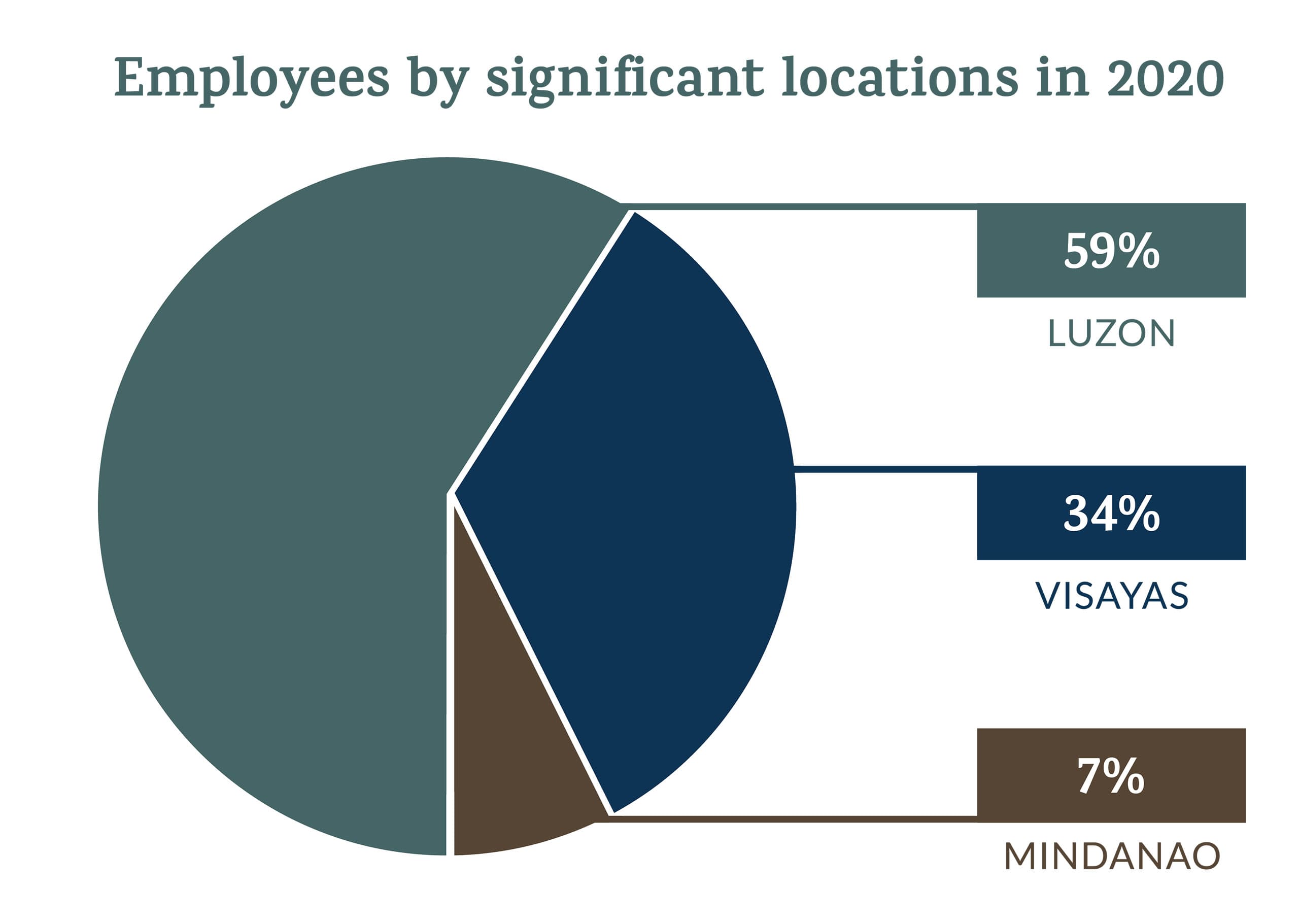
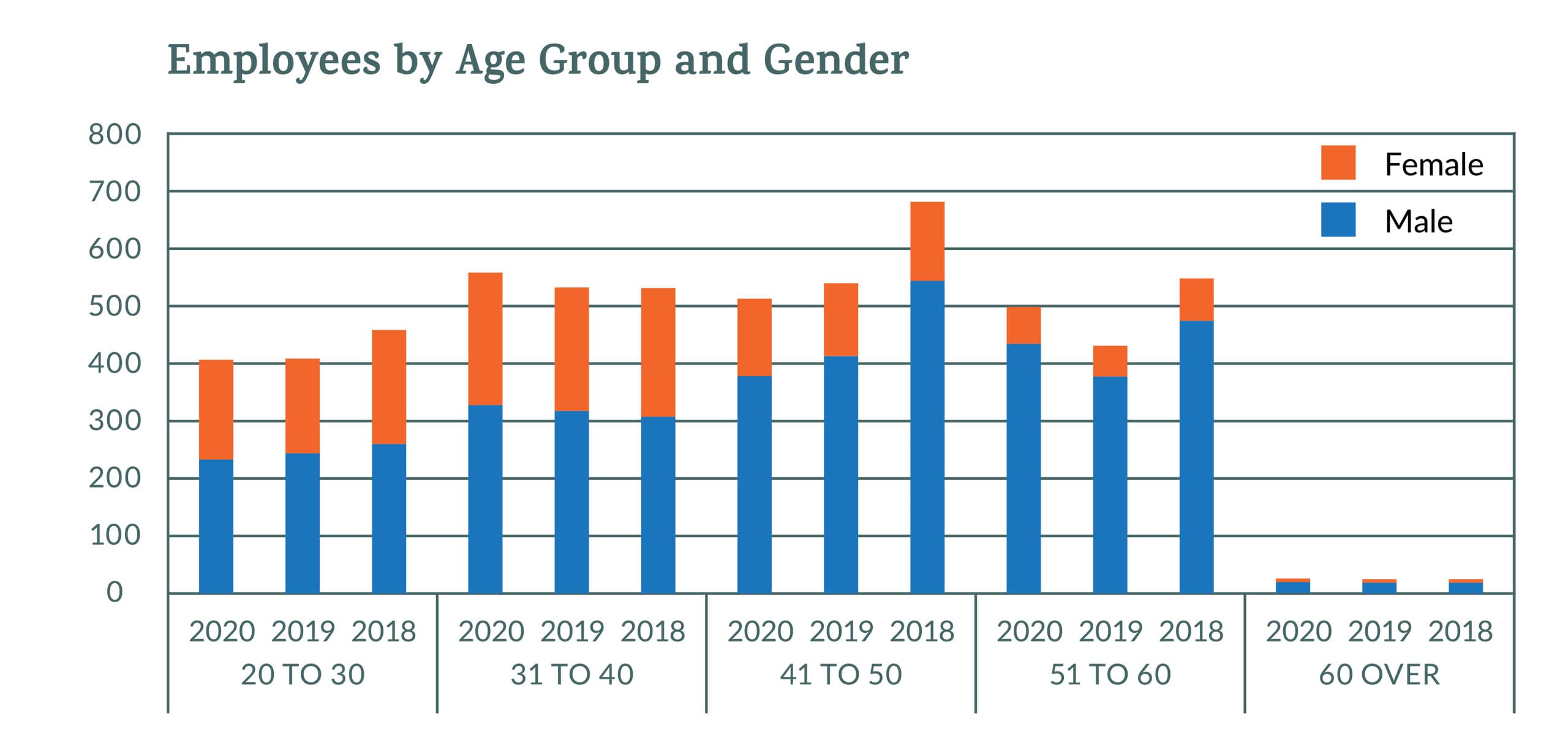
Despite the onset of the pandemic and rise of unemployment in the country, First Gen has a total of 2,012 employees in 2020, as seen on the table below. The Company has 2.3:1 male to female ratio for 2020 which has been decreasing for the last three years due to equal opportunities given to women. Majority of the employees are based in Luzon, where the head office is located, and most employees belong to the 20 to 40 age group.
| TOTAL EMPLOYEES BY GENDER FOR THE LAST 3 YEARS | ||||
|---|---|---|---|---|
| MALE | FEMALE | TOTAL | MALE TO FEMALE RATIO | |
| 2020 | 1,405 | 607 | 2,012 | 2.3:1 |
| 2019 | 1,379 | 564 | 1,943 | 2.4:1 |
| 2018 | 1,670 | 650 | 2,320 | 2.6:1 |
RECRUITMENT
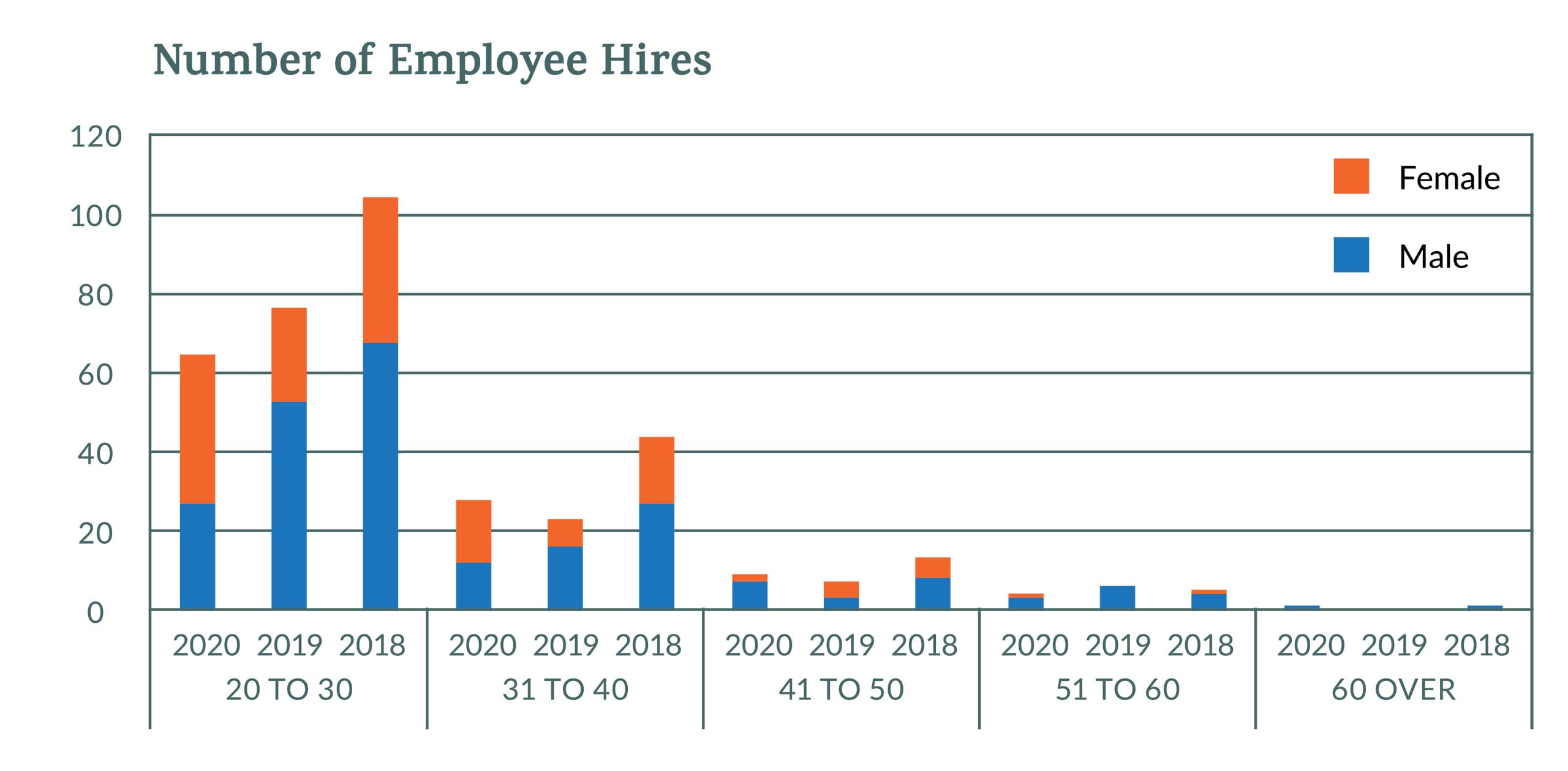
Despite the challenges and uncertainty brought forth by the pandemic, the Company’s continued market growth, robust project pipeline, and steadfast commitment to good governance still led to a hiring rate of 5.5 percent in 2020 which is slightly lower than 5.8 percent in 2019. A recent employee engagement survey showed that 90 percent of the employees believe new hires were highly qualified and possessed the right skills.
Majority of the hires were at the Professional/ Technical level as the Company seeks to provide more work opportunities for the young workforce. There were more females hired than males compared to the previous year, recognizing the effectiveness of female engineers especially in the Company’s growing sales force. In line with the commitment to diversity and in compliance with the Company’s Gender Equality and Diversity policy, screening tools were streamlined to remove questions that compromise equal opportunity for candidates.
The transition to the remote work arrangement made recruiting top-quality candidates challenging. However, the Company’s investment in its Human Capital Management system—WORKDAYTM— enabled the stringent yet seamless fully digital hiring, screening, and contracting of new employees. The Company is one of only two companies in the Philippines which has adopted WORKDAY, a top-tier system used by companies like Google, Amazon, Netflix, Bank of America, Visa, and other best employers in the world. Other virtual platforms like LinkedInTM and TalegentTM enabled continued sourcing and assessment of candidates. Virtual onboarding sessions allowed new hires to get oriented and welcomed into the organization.
For subsidiary EDC, there was no significant impact on recruitment since sourcing channels are still the same. In terms of interviews, it has become more flexible and convenient for the candidates as it is done online compared to face- to-face interviews. On the 2020 Employment Engagement survey, EDC employees reported that new hires easily adapted to the Company culture and processes.
Attrition decreased significantly at 2.2 percent in 2020, from 25.8 percent from the previous year. The top two reasons for leaving were pursuing other career opportunities (local and overseas) and career change.
First Gen recently reviewed its job levels and career paths as part of its employee retention initiatives. The Company created a clear career path for people managers as well as individual contributors. This increased transparency enabled leaders to more proactively support employees to grow and advance in the Company. Internal employees have filled up posts instead of hiring from the outside. First Gen also has employees in developmental assignments.
While there was a delay in the timeline for promotions for 2020, the Company is on track to promote 12.5 percent of the headcount. This is higher than the average of nine percent in the past three years. Even during the pandemic, the organization continued to grow, and both vertical and lateral internal movements outnumber external hiring.
COMPENSATION AND BENEFITS
First Gen continues to provide mandatory benefits prescribed by Philippine Labor Laws and Standards. There are also provides additional benefits such as allowances, insurance, medical, and bonuses. Additional benefits were also given as part of the response to the pandemic; this is discussed on page 120.
| ITEMS | EMPLOYEE LEVEL(S) ELIGIBLE |
|---|---|
| OVERTIME | |
| Overtime | Staff to Supervisor |
| Nightshift differential | Staff to Supervisor |
| Nightshift differential (ND1) | Staff to Supervisor |
| Nightshift differential (ND2) | Staff to Supervisor |
| GUARANTEED BONUSES | |
| 13th month pay | All levels |
| Financial Assistance Gratuity | All levels |
| ALLOWANCES | |
| Rice Allowance | Rank & File (Supervisors, Senior Staff, Staff) |
| Financial Assistance Gratuity | All levels |
| Transportation Allowance | Assistant Managers & Up |
| Car Allowance | Eligible Managers & Up |
| LEAVE BENEFITS | |
| Maternity leave - Normal (based on law) | All levels |
| Maternity - Cesarean (based on law) | All levels |
| Paternity leave | All levels |
| Solo Parents Leave | All levels |
| Bereavement Leave | All levels |
| Paid Time Off (PTO) | All levels |
| INSURANCE BENEFITS | |
| Life Insurance | All levels |
| Accident Insurance | All levels |
| Medical/Hospital Insurance | All levels |
| COMPANY FUNDED MEDICAL BENEFITS | |
| Medical and Medicine reimbursement | All levels |
| Annual Medical Check-up | All levels |
| OTHER BENEFITS | |
| Retirement Benefit* | All levels |
| Car Plan Benefit / Car Allowance | Eligible Managers & Up |
| Club Membership / Wellness Allowance | Eligible Assistant Vice Presidents (AVPs) & Up |
EMPLOYEE TRAINING AND CAREER DEVELOPMENT
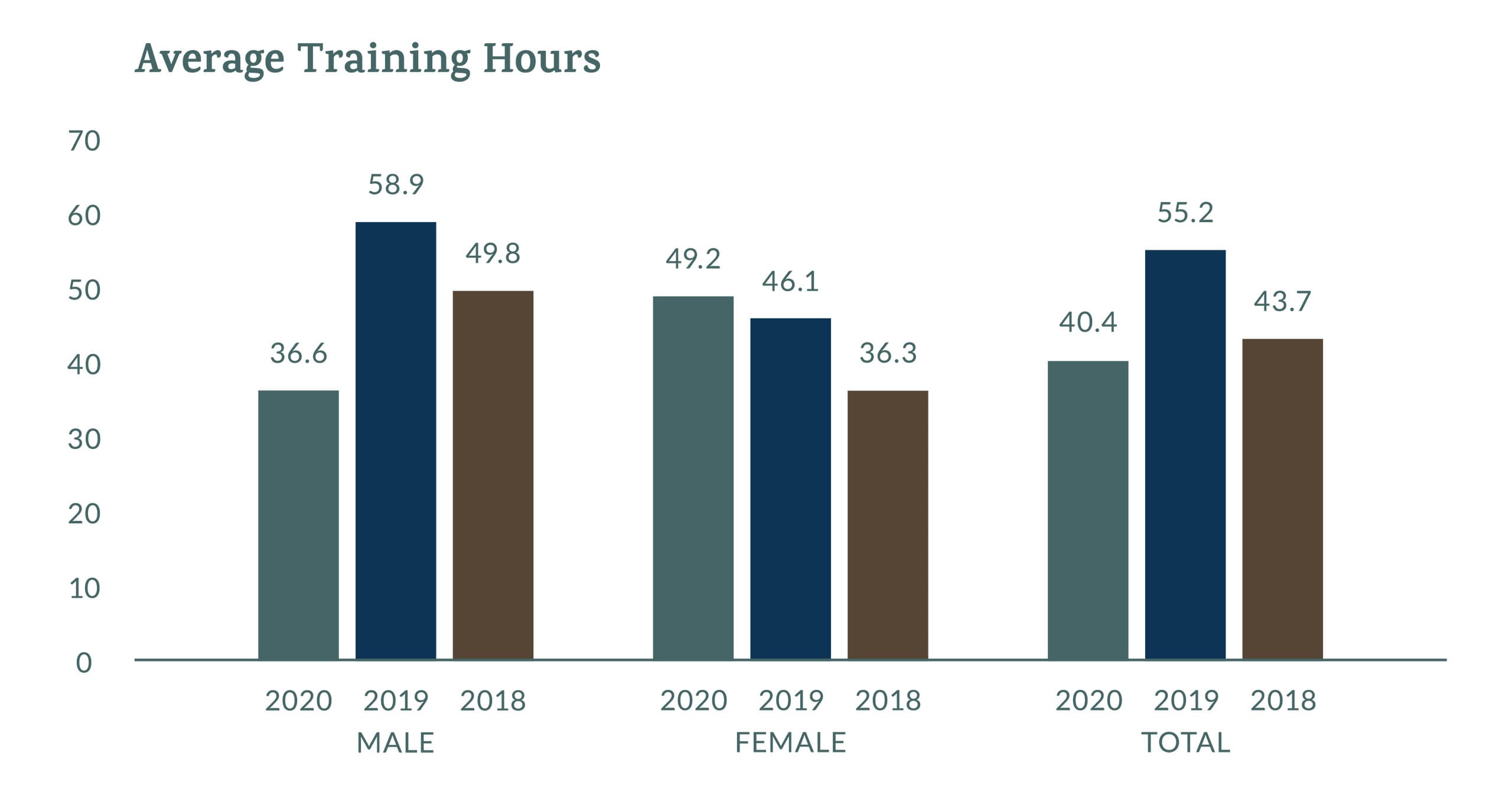
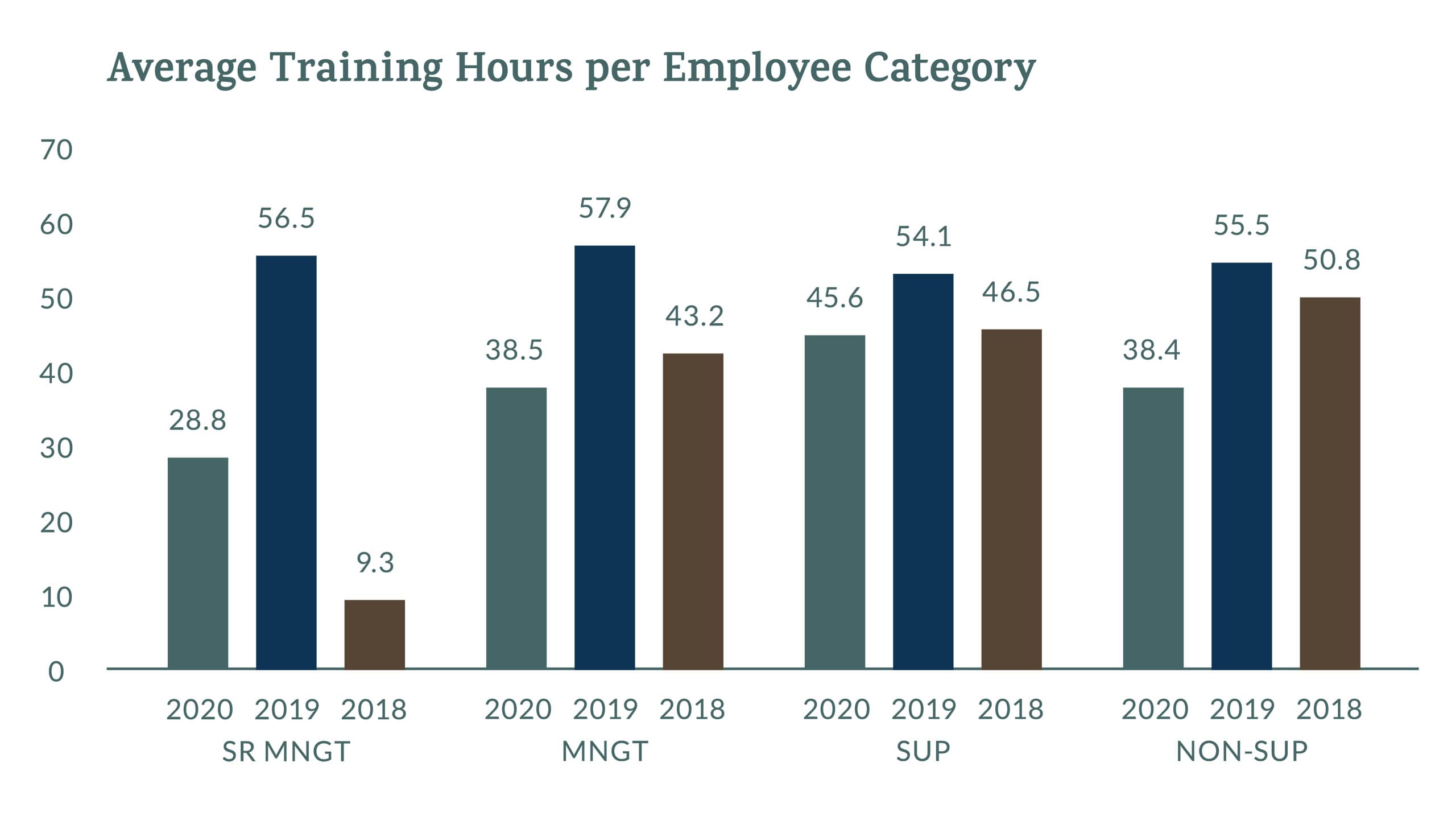
In 2020, the Company saw a drop in the training hours to an average of 40.4 hours per employee in 2020 from an average of 55.2 hours in 2019. Training providers took a while to adjust their offered courses, while a large bulk of the training hours from conferences and technical training got suspended. Connectivity was also a concern especially in the earlier part of the transition to the work-from-home arrangement.
These are some of the programs provided to the employees during the work-from-home arrangement. The Company is aware of the continuous need for learning and development across all levels in the organization.
| CORE | FUNCTIONAL | PEOPLE MANAGEMENT | LEADERSHIP |
|---|---|---|---|
| Data storytelling for Business | Professional Scrum Foundation (PSF) | Virtual Focus Group Discussions (FGD)/Exchange of Best Practice Sessions |
Executive Learning Sessions with RH |
| 7 Habits of Highly Effective People 4.0 | Professional Scrum Master Training |
Finding Our Way in the New Normal | Executive Masters in Business Administration |
| Project Management | PMP Certification | Managing Through Crisis by HBR | FPH Purpose - Mission Purpose and Way Forward |
| Virtual Presentation Skills Training | Technical Learning Series | Leadership for the Long Run Through Pandemic | |
| Gas 101 | Financial Modeling Workshop | Verge 2020 | |
| Power 101 | PEE Exam Level 1 | Leaders Coaching Leaders | |
| Agile Learning Series | Integrated Management System | Managing Difficult Conversations | |
| Innovation through Design thinking | Project Planning and Control |
In January 30, 2020, the Vision Boarding Workshop coached employees on how to create one that would direct them to work on their set goals.
The Company focused on supporting the workforce’s transition to remote work. An average of additional 3.1 hours per employee was recorded on Digital Enablement training. These included training on Kissflow, Docusign, Workday, Slack, and other tools.
Online demand was made available in Workday Learning. These were 5-min. to 20-min. learning content available on-demand and were released or promoted in the weekly Friday-Reads communications. Recordings of Gas 101, Finance 101, and Power 101 sessions on the platform were also made available. Additional content also became available in the Workday Learning platform. These were bite-sized learning sessions that were shared with people managers and the rest of the employees.
The Company continued to offer key programs such as SCRUM and Agile Certifications, as well as Project Management Courses. Two company- sponsored employees also graduated with their Executive Masters in Business Administration from the Asian Institute of Management this year.
Average training also significantly dropped across all ranks. Technical training and conferences, which mostly catered to the Supervisory and Staff levels, slowed down in 2020. While there were functional courses offered, this only reached 53 percent of employees as not everyone was able to avail of training, especially in the sites where connectivity was an issue.
2020 also highlights the Company’s learning engagements aligned with the new mission and chosen path of “forging collaborative pathways for a decarbonized and regenerative future.” Employees were given access to the Verge 2.0 Conference: “Accelerating the Clean Economy.” This was a week-long online conference about advancing systemic solutions to address the climate crisis through five key markets: clean energy, electrified transportation, the circular economy, carbon removal, and sustainable food systems.
Together with the FPH Group, the year ended with a series of Executive Learning Sessions led by Harvard Professor Rebecca Henderson. The author of “Reimagining Capitalism in a World on Fire” conducted a series of case study sessions with 45 case participants and 150 observers in each of the three case study sessions. The case study discussions allowed the Company’s leaders to think deeply through reimagining the Company’s business models, engaging the workforce, and collaborating with the industry.
Professor Henderson led the case discussions in the recently concluded Executive Learning Sessions for the FPH Group
EMPLOYEE SATISFACTION/ ENGAGEMENT SURVEY
First Gen, together with its parent company FPH, conducted a biennial enterprise-wide employee engagement survey with the objective of providing a formal channel for employee feedback and gathering their views about working in the Company. The survey data aims to measure the level of employee engagement and organizational effectiveness, know the areas where the organization can improve and provide guidance to management, and for employees to develop action items around opportunity areas.
A reputable consulting firm conducted the survey and processed the results. Before the actual survey, Human Resources reviewed the survey methodology and ensured the confidentiality of employee-respondents in the process. Employees participated voluntarily and responded online. HR was responsible for sharing the survey results and cascading them to all employees in a town hall set- up. The Survey Reports for each functional group were given to the group heads and HR will facilitate the action plans for the enterprise-wide, and each respective group, based on opportunity areas identified from the results.
The same activity was conducted a year after the last one in 2018. Employee participation was at 97 percent in November; the overall survey revealed equally solid and gratifying engagement results compared with previous survey results and as against Philippine norms, pre-pandemic, amid the challenging situation. The highlights of employee feedback, among several important findings, were as follows:
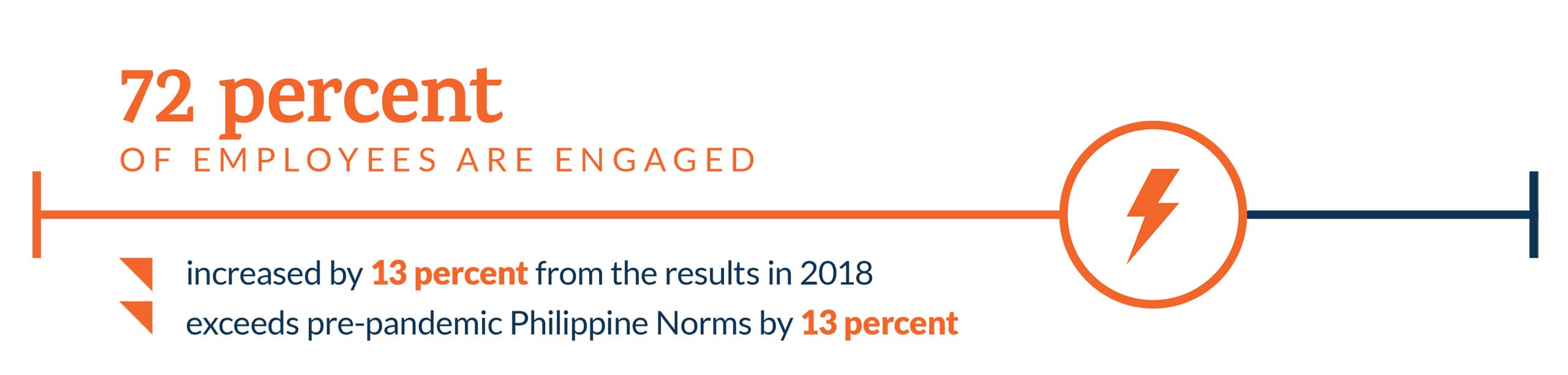
Senior Management's exemplary response to the global pandemic helped cement the feeling among FPH and First Gen employees on management's genuine interest in their well-being. This significantly improved the results on senior management performance. This is evident in that more than 90 percent of employees would recommend FPH or First Gen to others as a good place to work, while almost 80 percent of employees would rather stay with FPH or First Gen even if a comparable job was available in another company. The results for these two statements would seem to reflect appreciation by employees of Senior Management’s strong response to the pandemic, as well as an appreciation of the FPH and First Gen’s stability during the economic downturn.
- Company Culture / Values / Care for employees are what employees like best about working at FPH / First Gen
- Statement on “[Values] My company takes care of the community” was the highest scoring climate statement in 2018 and today as well.
- FPH / First Gen’s second highest scoring climate statement measures whether employees believe that they are advised well and that all health and safety requirements are consistently followed.
- Women close the gap in perceptions with men across survey climate dimensions.
Many employees currently cannot identify anything more that FPH or First Gen could do to support them. “Current Support is Sufficient” was, by far, the most frequently mentioned statement for the question on “how can the Company better support you during this time.”
Note that for the 2020 survey, the score on job- related training declined from the previous survey due to the pandemic situation and the restrictions on gathering.
Overall, employee confidence toward Senior Management is evident in the results, which is a key driver of employee engagement in any organization. This confidence was further acknowledged when the Company’s Chairman, Federico R. Lopez, was awarded 2020 Management Man of the Year by the Management Association of the Philippines.
The next steps, based on the survey results, involve analysis and action planning by the different groups who are working with HR partners in identifying initiatives for improved engagement.
For EDC, the following activities were conducted to measure employee engagement satisfaction and well-being:
- “Kamustahan” Surveys were conducted regularly. Initially every two weeks, it was then adjusted to monthly intervals to get the employee’s pulse on different life aspects such as Work, Health, Safety, Resources, Finance, Relationships, Personal Time, and Leisure. The results showed that employees were able to cope with work’s demands despite the pandemic. Safety and Health were highly prioritized while Personal Time and Leisure were wanting. Overall, on a scale of one to 10, majority of employees see themselves between seven and eight.
- The Engagement Pulse Survey, a subset of the full Employee Engagement Survey, was also conducted in the middle of 2020 to see the progress on the key priority areas from the results of the 2019 full survey. The priority areas were in Change Management, Collaboration, Organization, Understanding, and Drive. All five categories improved compared to the 2019 scores from two to as much as 17 points telling management that it was moving in the right direction.
OCCUPATIONAL SAFETY AND HEALTH
First Gen has an established Occupational Safety and Health Management System (OSHMS) based on Philippine OSH regulations and aligned with ISO 45001:2018. This is adopted by its operating assets, ensuring that all employees and outsourced workers know how to determine hazards and risks and maintain a safe and healthy workplace and environment.
All employees and contractors are covered by an OSHMS that is internally audited by the Corporate Quality, Environment, Safety, and Health (QESH) group. First Gen’s subsidiaries FGPC, FGP, FNPC, FG Hydro, and FG Bukidnon’s OSHMS (which covers 25.7 percent of employees and 14.1 percent for contractors) have their own respective certification bodies.
OSH hazards are assessed and evaluated using the Hazard Identification, Risk Assessment, and Control (HIRAC) methodology. The HIRAC is part of OSH Risk Management Process where OSH hazards are assessed and evaluated for safety, financial, and reputational impact. Proponents identify controls to manage and mitigate the risks. When evaluating, the goal is to reduce the hazard to "as low as reasonably practicable (ALARP)," as there is a zero tolerance policy on safety.
People who evaluate OSH risks are trained on the HIRAC process. At the facility level, the HIRAC process is facilitated by the Process Owner, and participated in by employees and site OSH officers. Review of the outputs of these HIRAC processes is conducted by the Corporate QESH to validate significant OSH risks.
HSE observations (safe observation, unsafe act, unsafe condition) and near misses are managed using EDC’s Good Catch. Good Catch allows everyone in the Company to show true “MALASAKIT” (concern) to others by:
- Being more aware of the work surroundings and engaging others in HSE matters
- Being able to promptly act in response to unsafe observations and near misses, which shows genuine care for a co-worker’s welfare
- Fostering a learning environment, given the HSE observations, interventions, conversations, and fixes made.
The required Occupational Safety and Health (OSH) training programs for employees are identified and assessed based on regulatory requirements, results of risk assessments, and required competency of personnel responsible for the task. There are several training programs planned for the employees for the year, however, some trainings were deferred due to restrictions in gathering and connectivity issues. Regardless, the Company conducted several orientations and discussions in 2020 that focused on the established measures and protocols for COVID-19. These are some of OSH trainings that were conducted for the year:
- Mandatory 8-hr OSH Seminar
- First Aid, Basic Life Support and AED
- QESH Orientation for Head Office
- Site Specific Safety Orientation of Employees/Contractors/Visitors
Workers at all work sites are also oriented in site- specific OSH awareness, trained to maintain a safe work environment and even COVID-19 awareness and prevention. At the Head Office, for example, new workers are oriented in safe work practices by QESH, and the Emergency Response Team is trained in first aid and basic life support, among other training provisions.
Incident investigation and management
All incidents shall be reported to supervisors and management. Depending on the results of the incident, appropriate and timely investigation is implemented. Investigating teams are composed of management, supervisors and workers who are either: 1) knowledgeable of the investigating process, and 2) proficient in the tasks or work involved in the accident.
Several investigation techniques are employed such as TapRoot, Root Cause Analysis, and Failure Mode and Effects Analysis, depending on the nature and result of the incident. Results of investigation are used to formulate the appropriate actions to prevent recurrence of accidents. Risk assessment on proposed corrective actions are also done before these are carried out. All lessons learned in the accident are disseminated to the organization as part of administrative control. The actions taken are evaluated for effectiveness. To further avoid accidents, all near miss incidents are reported for proper corrective action.
The man-hours worked for the year significantly dropped as prioritized critical projects were implemented to prevent the spread of the virus. The total recordable incidents rate decreased as medical treatments cases went down.
Despite the Company’s efforts to influence and promote safety in the workplace, an unfortunate incident led to a contractor fatality. To prevent recurrence, a thorough investigation following established protocols was carried out to identify root causes, implement corrective actions, and draw out the lessons learned. Verifications and validations were likewise conducted to ensure corrective actions implemented were effective in addressing the root causes. The learning was shared with operations having similar risk exposure.
| 2020 | |||
|---|---|---|---|
| MEASURE AND UNIT | EMPLOYEES | CONTRACTORS | TOTAL |
| Actual Man-hours Worked | 4,757,115 | 12,399,119 | 17,156,234 |
| Work Related Fatalities due to injury (no. of cases) |
0 | 1 | 1 |
| Fatality rate | 0 | 0.02 | 0.02 |
| Work Related Fatalities due to illness (no. of cases) |
0 | 0 | 0 |
| Disabling Injury > 6mos. (no. of cases) |
0 | 1 | 1 |
| Disabling Injury < 6mos. (no. of cases) |
1 | 3 | 4 |
| Restricted Work Case (no. of cases) |
0 | 2 | 2 |
| Medical treatment (no. of cases) |
1 | 2 | 3 |
| Total Recordable Incident Rate | 0.08 | 0.15 | 0.13 |
| Near Miss (no. of cases) | 28 | 19 | 37 |
| 2019 | |||
|---|---|---|---|
| MEASURE AND UNIT | EMPLOYEES | CONTRACTORS | TOTAL |
| Actual Man-hours Worked | 4,639,183 | 14,982,426 | 19,621,609 |
| Work Related Fatalities due to injury (no. of cases) |
0 | 0 | 0 |
| Fatality rate | 0 | 0 | 0 |
| Work Related Fatalities due to illness (no. of cases) |
0 | 0 | 0 |
| Disabling Injury > 6mos. (no. of cases) |
0 | 1 | 1 |
| Disabling Injury < 6mos. (no. of cases) |
0 | 0 | 0 |
| Restricted Work Case (no. of cases) |
0 | 2 | 2 |
| Medical treatment (no. of cases) |
4 | 12 | 0.16 |
| Total Recordable Incident Rate | 0.17 | 0.20 | 0.19 |
| Near Miss (no. of cases) | 36 | 9 | 45 |
| 2018 | |||
|---|---|---|---|
| MEASURE AND UNIT | EMPLOYEES | CONTRACTORS | TOTAL |
| Actual Man-hours Worked | 4,415,502 | 11,903,643 | 16,319,145 |
| Work Related Fatalities due to injury (no. of cases) |
0 | 0 | 0 |
| Fatality rate | 0 | 0 | 0 |
| Work Related Fatalities due to illness (no. of cases) |
0 | 0 | 0 |
| Disabling Injury > 6mos. (no. of cases) |
0 | 0 | 0 |
| Disabling Injury < 6mos. (no. of cases) |
1 | 3 | 4 |
| Restricted Work Case (no. of cases) |
2 | 0 | 2 |
| Medical treatment (no. of cases) |
5 | 12 | 17 |
| Total Recordable Incident Rate | 0.36 | 0.25 | 0.28 |
| Near Miss (no. of cases) | 37 | 38 | 75 |
DIVERSITY & INCLUSION/NON–DISCRIMINATION/HUMAN RIGHTS
First Gen has an Anti-Sexual Harassment Policy which promotes a favorable work environment that values the dignity of every person and guarantees full respect of human rights, free from offensive behavior and intimidation detracting from the employee’s ability to perform their jobs. It identifies procedures to be followed in investigating and resolving complaints alleging specifically prohibited conduct and emphasizes the education and training of employees. The Company conducted the re- orientation of the Anti-Sexual Harassment in the Workplace policy. The orientation also included the 2 “Safe Spaces Act” in 2019 that expanded the scope to a gender-based law ensuring equality between women and men.
The following activities were also conducted in support of the Anti-sexual Harassment in the Workplace policy:
Creation of Committee on Decorum and investigation. The Company ensured that there was equal or more female representation in the committee as required by the law. Selection of members to represent the employees in the promotion of a safe workplace environment and handling of cases of sexual harassment was done through nomination by employees. HR profiled the nominated employees and announced to all employees the committee’s composition after commitments of each member were sought.
Measuring engagement level by gender. Gender-based measures were embedded in the programs to monitor gaps, if any, between male and female employees in terms of engagement, needs, and opportunities.
COVID-19 RESPONSE FOR EMPLOYEES
The COVID-19 pandemic has disrupted many organizations, and the Company was not spared from its effects. This caused the HR Group to think differently, plan cohesively, and respond swiftly to changing situations since the outbreak started in the first quarter of 2020. As part of the BCP team, the HR leadership has been primarily concerned with the assets of the business — the people. HR plays a key role in the personnel interface elements of the business continuity plan.
Part of the planning process outlines resource allocations, including information on how employees may be deployed into other areas of work should certain groups not have the adequate staffing due to illness, travel restrictions, or even death.
In response specifically to the pandemic, HR, first and foremost, has undertaken several programs and policy changes to ensure the safety and welfare of the workforce and still supports the organization given the sudden shift to the new normal.
Work from Home Arrangement
The Work-from-Home (WFH) arrangement was one of the firsts that the organization has implemented as part of the Company’s business continuity plan, and in the light of Proclamation No. 922 entitled “Declaring a State of Public Health Emergency Throughout the Philippines” signed by the President on March 8, 2020. Through this alternative work scheme, work in general will continue despite disruptive situations. The Company’s intent was to strike a balance between the interest of continued delivery of services to customers and the public, and the health and safety of its workers. Guidelines on work tools and IT infrastructure, and eligibility criteria were set for employees to meet, perform the work, and be able to communicate or collaborate with other employees or stakeholders.
Recognizing the other benefits of the WFH arrangement to individuals and to society—such as better work life balance, reduced traffic, less commute times, and increased productivity—the Company conducted a survey entitled ‘Work from Home Conditions Survey’ among its employees to gather baseline data, and to assess the situation after about two months of implementing the WFH. The results of the study generated insights and ideas on how to make WFH work for the organization beyond providing business continuity, but also in the long term, and on a more regular basis. The top areas for improvement on the overall WFH experience shared by the respondents were considered in formulating new policies and programs, and in redesigning employee benefits.
These focused surveys had an average response rate of 85 percent. The Company identified four factors for measuring WFH enablement: device, data, voice, and video. 91 percent of respondents working from home checked all these factors and are considered WFH-enabled. The survey also showed which activities employees find better doing at home or at the office, as well as changes on their work schedule (WFH versus office).
Shelter-In-Place (SIP)
Essential personnel are those individuals in the organization required to report to work regardless of conditions, such as Operations & Maintenance and security personnel. Worksites that remained open or had to be manned by security workers during this time had to adopt a SIP arrangement primarily to contain the movements of people, thus reducing the risk of spreading the virus. Management had to deal with a variety of factors such as including lodging, food and water, transportation, and even strict protocols among those on SIP.
“In response specifically to the pandemic, HR, first and foremost, has undertaken several programs and policy changes to ensure the safety and welfare of the workforce.”
Return to Workplace
While there is no general call to return to the workplace until further advice, some employees may be required to enter the office premises for urgent official business reasons. In coordination with the Administration unit and the Health team, HR pioneered an efficient process that includes registration, mandatory health check, attendance to an online briefing, and observance of health protocols while inside the premises. The latest additions to the re-entry requirements were presenting the so-called ‘Pasig Pass’ (applicable to the head office only) and the wearing of proximity ID badge for efficient contact tracing.
Return to Home (Homecoming) Program
EDC helped stranded employees during the community quarantine in different locations. Aside from helping secure the necessary travel and medical clearances, the Company also chartered an aircraft to transport a total of 54 EDC employees and contractors so they could return to their families. They were flown to different destinations across the Philippines—from North (Aparri) to South (Zamboanga).
Repurposing of Benefits/Allowances
New guidelines on employees benefits and tools of the trade were introduced, specifically for the following:
Clothing and Transportation Allowance: A more inclusive approach was implemented to further support employees in the WFH arrangement. Other than the usual gasoline, maintenance, toll fees, and other vehicle-related expenses, the Company allowed the inclusion of various WFH items in the liquidation, such as:
Connectivity Support (wi-fi upgrades, or new wi-fi installations, purchase of pocket wi-fi and plan, and monthly internet data bills),
Work tools (new gadgets, home printer, computer accessories, purchase of software, and increasing of existing memory of personal gadgets),
Office furniture (office desk, ergonomic chair, table lamp), and
For EDC, philanthropic actions (for personal donations to their respective communities or charitable institutions).
Adoption of HR Technology
The WFH heightened the need for access to electronic information (compared to physical documents in the pre-COVID-19 situation), and for people processes and services to continue to function effectively without needing face-to-face interactions. About six months after the system went live, Workday became the go-to system for employees, people managers, and HR in terms of people and organizational processes since the community quarantine started in the first quarter of 2020. HR’s key business processes such as Recruiting, Probation Management, Learning, Expense Reimbursements and Liquidation, Performance, Separation and Exit Clearance, ESS/ MSS self-service, among others, started running under the Workday platform. The adoption has not been easy, but with the right adjustments and communication approach across the various stakeholders, the Company started to realize the business benefits of Workday in transforming the traditional manual system into automated business processes.
Communication
Timely and clear communication is critical in maintaining employee engagement.
- Zoom
- ZoomMustahan virtual town hall sessions for Company updates and COVID Response, FPH/First Gen Mission Launch (August), and Year-End (December).
- These virtual town halls had a Q&A session to ensure that employees can speak their minds and can interact directly with the management.
- Overall employee reach of all four sessions is 94 percent.
- EDC Group Leaders held regular online “Kamustahan” sessions with their respective teams to check on their status and to simply have non-work conversations.
- Slack
- Slack helped the Company drive and promote the 3Cs: Communication, Collaboration, and Community Building in this new work environment. This was rolled out this year.
- Communication: Reach everyone with company updates, increase leadership visibility, and measure reach and impact of communication
- Collaboration:Easily Collaborate Across the organization and within teams or groups, improve ideation through collaboration and community solving
- Community Building: Allow active online participation and discussions, get the pulse of the organization
- 95 percent employee activation (400+ weekly active users)
- Slack helped the Company drive and promote the 3Cs: Communication, Collaboration, and Community Building in this new work environment. This was rolled out this year.
- Viber
- An EDC-wide Viber Group was created to provide employees access to daily work check-ins.
Employee Welfare and Wellness
The pandemic had varying degrees of impact on individuals depending on their personal circumstances. The WFH employee survey consisted of questions directed at gauging mental health as well as uncovering the issues faced by individuals in light of all the changes happening around them. Even the government has issued a directive mandating all establishments to formalize a mental health policy.
The Company continued its well-being programs but redesigned this to focus more on mental and emotional health due to the effects of pandemic and lockdown on employee well-being. The Company held a series of sessions on mindfulness and mental resilience during a pandemic or crisis, and sessions on the mental health basics and learning some best ways to help spread positivity and good mental health in the workplace.
The Company’s holistic approach on its well-being programs ensures there are activities for employees as well on other aspects affecting engagement and well-being such as:

Financial: Learning sessions on financial wellness during the pandemic

Social activities: Christmas party, Halloween fun night, and other celebrations

Creative: Creating Positive space by inviting nature into the home

Spiritual: Regular First Friday mass celebration, Thanksgiving Masses and Recollection

Physical: Yoga sessions and weekly exercise tips
Medical services
Medical services are available across the organization, covering occupational and non- occupational scopes. Services include access to medical professionals for consultation. After the WFH and SIP arrangements in 2020, consultations are made available via telehealth or a virtual platform. The consultation services were likewise extended to employees' dependents.
Clinics and teams, which support the continued operation of the Company at the sites, made sure to have sufficient supply through the shipment of medical equipment and infirmary supplies such as PPEs, surgical and N95 masks, thermometers, and medicines, among others.
Emergency response was also adjusted to fit the current situation with the additional layers of protection for both responders and patients. Emergency transport vehicles were equipped with separators, responders were provided with appropriate PPEs, and temporary isolation units were also constructed.
EDC realized how stressful the current pandemic was and shift to new working arrangements. Efforts were doubled toward caring for employee mental and emotional well-being. In addition to the existing Employee Assistance Program (EAP) partner, PowerVision EAP Inc., they engaged another provider, MyGolana, to support employee’s needs. The providers offer hotline and counseling sessions for employees. Cebuano-speaking associates were also added for a more inclusive approach especially for the employees based in Visayas and Mindanao. Several online learning sessions tackling a wide array of topics such as Making WFH Work, Love Languages, Managing Personal Energy, Understanding Anxiety and Depression were conducted by experts from the partners and attended by hundreds of employees.
Employees and dependents seeking COVID-19 testing were linked to facilities that provide this. Partnerships with LGUs and health institutions were strengthened to accommodate the employee and dependent requests for medical services.
Job Protection and Employment Preservation
To this day, the Company continues to do its share in job protection and employment preservation to curb the impact of the pandemic. The Company remains committed to providing the necessities and activities related to power and energy, and vigilant to avoid any disruptions in the delivery of its services. Should the nature of work become a limitation, managers are empowered to restructure or redefine work output, design work sharing mechanisms, or do cross-training. As the pandemic is expected to linger on for an extended period, First Gen will continue to implement the WFH and SIP arrangements, and the new programs and practices implemented in 2020.
Pulse surveys
FPH/First Gen HR released Pulse Surveys as quick check-ins to its employees during the height of the lockdown:
How do you feel and how can the company help you cope? (March)
How do you feel and message for colleagues? (April)
How do you feel and learning activities while WFH? (April)
Mental Health Check (June).
These Pulse Surveys had an average response rate of about 30 percent. For Pulse Surveys #1 to #3, the Company measured how employees feel at that certain point in time. It shows that positive emotions increased over time, which may be attributed to their adjustment in the WFH arrangement and the interventions done by the Company to support employees (e.g., communications released).
Pulse Survey #4 (Mental Health) had a 42 percent response rate. Results showed that 40 percent of respondents felt positive emotions only, 21 percent felt negative emotions only, and 39 percent felt mixed emotions. The specific feelings of employees were gauged in the last three months—59 percent of respondents say they are feeling worried about things, 34 percent were sleeping too much or too little, and 31 percent were feeling burned out.
According to the survey the top factors which may have contributed to these feelings are: COVID risk, uncertainty about the future, and the political landscape and national situation. When asked about their coping mechanisms: 19 percent say mindfulness exercises and doing hobbies.
First Gen continues to innovate and plan for ways to ensure that its prime partner in the business, the employees, are reached out and cared for as they grow with the Company.